
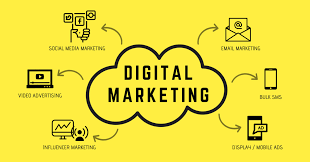
As we move deeper into the digital era, 2026 promises to be a revolutionary year for digital marketing. Rapid technological innovation, shifting consumer behaviors, and new regulatory landscapes are reshaping how brands connect with audiences. In this article, we explore the key trends, emerging technologies, and strategic shifts that will define digital marketing in 2026.
🚀 1. AI and Machine Learning: The New Creative Engine
Artificial intelligence (AI) continues to be the most transformative force in digital marketing.
Automated Content Creation: Tools powered by generative AI will evolve from drafting social posts and ads to co-creating entire campaigns, creative briefs, and multimedia content.
Predictive Customer Insights: ML models will predict not just what consumers might buy, but when and why, enabling hyper-personalized engagement at scale.
Real-time Personalization: Websites and apps will change dynamically based on individual behavior, preferences, and context — increasing conversion rates and customer satisfaction.
AI-driven marketing is no longer a nice-to-have — by 2026 it will be central to competitive advantage.
📱 2. Immersive Experiences: AR, VR & the Metaverse
Immersive technologies are transforming customer engagement:
Augmented Reality (AR): Try-before-you-buy virtual experiences — from furniture in your living room to cosmetics on your face — will become mainstream.
Virtual Reality (VR): Brands will host fully immersive shopping events, launches, and experience centres in the metaverse.
Metaverse Presence: Leading brands will have virtual storefronts, interactive brand worlds, and customer service avatars.
These experiences make engagement emotional, memorable, and shareable — a powerful shift beyond traditional ads.
🤖 3. Conversational Marketing & Intelligent Interfaces
Chatbots and voice assistants are evolving into intelligent conversational agents:
Voice Search Optimization: With smart speakers and AI assistants becoming ubiquitous, brands will optimize content for natural language queries.
Conversational Commerce: Chat-driven shopping — where consumers buy while chatting — will grow across messaging platforms.
AI Customer Support: Intelligent AI agents will handle complex queries and escalate seamlessly to human support when needed.
The boundary between communication and transaction will blur — making conversations revenue-generating.
📊 4. Data Privacy, First-Party Data & Ethical Marketing
With rising data privacy laws (like GDPR and India’s evolving policies), marketers must adapt:
First-Party Data: Brands will prioritize building their own trusted data assets through loyalty programs, subscription experiences, and opt-in channels.
Privacy-Preserving Tech: Techniques like federated learning and differential privacy will enable personalization without invading privacy.
Ethical Marketing: Transparency, consent, and value exchange will define brand trust.
Consumers will choose brands they trust with their data — pushing ethical marketing from optional to essential.
📈 5. Short-Form Video & Visual Commerce Domination
Short-form video is already king — and in 2026 it’ll rule the roost:
Live Shopping: Real-time product showcases with instant checkout.
Social Commerce: Shoppable posts on platforms like YouTube Shorts, Instagram Reels and TikTok will account for a much larger slice of e-commerce.
User-Generated Content (UGC): Authentic customer videos will outperform polished ads in engagement and trust.
Video isn’t just content — it’s commerce.
📱 6. The Rise of Micro-Communities and Niche Platforms
In 2026, one-size-fits-all audiences disappear:
Micro-Communities: Brands will find and nurture small, passionate groups on platforms like Discord, Slack, and niche social apps.
Consumer Tribe Marketing: Instead of broad demographics, marketers will target behavior and interest-based tribes.
Influencer Evolution: “Nano” and “micro” influencers — with high trust and engagement — will outperform mega-celebrities in ROI.
True influence is authenticity, not follower count.
🎯 7. Automation & Martech Stack Evolution
Marketing technology platforms will continue to consolidate and integrate:
Unified Marketing Platforms (UMPs): One interface for campaign ideation, activation, analytics, and optimization.
Low-Code/No-Code Tools: Marketers will build complex workflows without deep technical skills.
Automated Optimization: AI will A/B test and tweak campaigns in real time for maximum impact.
Automation will shift focus from execution to strategy and creativity.
🌍 8. Sustainability & Purpose-Driven Branding
Consumers increasingly expect brands to have a purpose beyond profit:
Sustainable Marketing: Transparent claims, eco-friendly storytelling, and ethical positioning will resonate deeply.
Impact Metrics: Beyond clicks and conversions, brands will measure social impact, customer trust, and environmental contribution.
Purpose isn’t a trend — it’s a business imperative.
🧠 What This Means for Marketers
To thrive in 2026, marketers must:
Embrace AI — Train teams on AI tools and workflows.
Prioritize Privacy & Trust — Build ethical data strategies.
Invest in Immersive & Conversational Tech — Engage audiences in new worlds.
Create Experiences, Not Just Ads — Be memorable, not interruptive.
Focus on Communities — Build loyal audiences, not vanity metrics.
🚀 Conclusion
Digital marketing in 2026 will be smarter, more immersive, and deeply human. Technology will drive personalization and scale — but it’s trust, creativity, and experience that will determine which brands win.
Welcome to the next era of customer engagement. The future is interactive, ethical, and emotionally intelligent — and it starts now.
If you want, I can tailor this to your business (e.g., restaurant marketing strategy for 2026).
Hi, this is a comment.
To get started with moderating, editing, and deleting comments, please visit the Comments screen in the dashboard.
Commenter avatars come from Gravatar.